





Browse Our Collections
Explore thousands of objects from the Penlee House collections.
Search the Collections
Found 1298 objects in the category Archaeology

Romano british sherd base
Romano British sherd base found at Chysauster, near Gulval in 1897.
PEZPH : 1975.658
Archaeology
Discover More
Romano british sherd base
Romano British sherd base found at Chysauster, near Gulval in 1897.
PEZPH : 1975.659
Archaeology
Discover More
Romano british sherd base
Romano British sherd base found at Chysauster, near Gulval in 1897.
PEZPH : 1975.657
Archaeology
Discover More
Romano british sherd base
Romano British sherd base found at Chysauster, near Gulval in 1897.
PEZPH : 1975.656
Archaeology
Discover More

Roamn copper bowl
Roman copper bowl, found by workmen whilst building Hayle Causeway in 1825. Bowl contained a number of Roman coins.
PEZPH : 1975.654
Archaeology
Discover More

Roman coins
Roman coins minims, few third brass of Terncus, Victorinus and Postamus. Very corroded. Found within a Roman copper bowl by workmen whilst building Hayle Causeway in 1825.
PEZPH : 1975.655.1-71
Archaeology
Discover More

Vespasian coin
Roman coin from the reign of Vespasian, found at Penzance Cemetery in 1899.
PEZPH : 1975.652
Archaeology
Discover More
Vespasian coin
Roman coin from the reign of Vespasian, found at Penzance Cemetery in 1899.
PEZPH : 1975.653
Archaeology
Discover More

Roman coin
Follis coin from the reign of Constantine I the Great, AD 307-337, found at Alverton, Penzance. Depicts the Sun God, Sol, naked with a cloak draped over his shoulder, holding a globe. Radiate - with sun's rays behind head.
PEZPH : 1975.651
Archaeology
Discover More

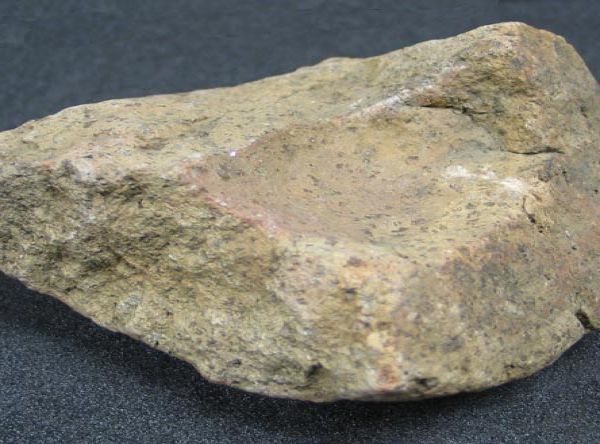
Iron age /romano-british stone bowl
Part of an Iron Age /Romano-British stone bowl including flat rim. Found at Vyneck, St Buryan.
PEZPH : 1975.646
Archaeology
Discover More

Piece of plaster roman
Piece of plaster from Roman villa excavated at Magor Farm, Camborne by Colonel FC Hirst in 1931. Painted with floral and line patterns
PEZPH : 1975.645
Archaeology
Discover More
Piece of plaster Roman decorated
Piece of plaster from Roman villa excavated at Magor Farm, Camborne by Colonel FC Hirst in 1931. Decorated floral and line, white beige and brown
PEZPH : 1975.644
Archaeology
Discover More
Piece of plaster from Roman villa
Piece of plaster from Roman villa excavated at Magor Farm, Camborne by Colonel FC Hirst in 1931. Painted in floral and line design beige and brown
PEZPH : 1975.642
Archaeology
Discover More
Piece of plaster from roman villa
Piece of plaster from Roman villa excavated at Magor Farm, Camborne by Colonel FC Hirst in 1931. Painted in floral and line pattern, brown and beige
PEZPH : 1975.643
Archaeology
Discover More
Roman iron fragment
Roman iron fragment excavated at Magor Farm, Camborne by Colonel FC Hirst in 1931.
PEZPH : 1975.637
Archaeology
Discover More
Roman iron fragment
Roman iron fragment excavated at Magor Farm, Camborne by Colonel FC Hirst in 1931.
PEZPH : 1975.638
Archaeology
Discover More